This is a question I’m often asked, especially when I go on TV: what are dreams and what do they mean? (You can see this in one of my appearances on Loose Women below). I talk about this more in my book Answers in the Dark: Grief, Sleep and How Dreams Can Help You Heal.
It’s a debate we’ve had for centuries, in fact we’ve been describing dreams for thousands of years. The Chester Beatty Papyrus #3 was dated to 1220 BC, and contained a manuscript of dream theory and interpretation. This is where the Theory of Opposites is believed to originate – that if, for example, you dream about death, it means there is a birth on the horizon.
A Greek gentleman called Artemidorus (who lived around the second century AD), created the Oneirocritica, the next large piece of work which attempted to understand, explore and explain fully what dreams meant.
After that, it was hundreds of years before influential work came from Sigmund Freud in the early 19th century, with his work influenced by his peers and mentors before him. His student Carl Jung followed him, although approached dream theory from a different angle than those that Freud became famous for.
There have been other names in this field, some you may or may not recognise: Alfred Adler, John Kappas and Nerys Dee to name a few and all approached the concept of dreams and their meanings differently. Joe Griffin, a 21st century dream theorist approaches his work from the Human Givens theory. All of these people have played an important part in understanding what dreams mean and why we have them.
It’s important that we don’t ‘westernise’ dreams though. Culturally, dreams play an important part in the lives of people around the world. There are many different approaches among indigenous tribes including Shamanic traditions and the Alchera, two examples of how communities involve dreaming in their traditions and way of life. In some Buddhist traditions there is a focus on lucid dreaming.
What is important to remember is that we’ve only been scratching the surface of dreams and sleep scientifically speaking over the last century. We know for certain that we need to sleep and we need to dream. Various studies including this one (reported on the BBC website and originally published in Science Magazine) have concluded that without dreams and sleep, we become ill and our memory is affected. But we are still a long way from knowing with any certainty why we have dreams and what they mean.
And as I explain in Answers In The Dark, because we are all unique, so are our dreams; only the dreamer can decide individually, ultimately what they mean.
Delphi is the author of Answers In The Dark: Grief, Sleep and How Dreams Can Help You Heal, out now on Amazon and Hive. The Dreams Maven™ is part of the Helping You Sparkle™ portfolio. You might also like Monday Mojo™.
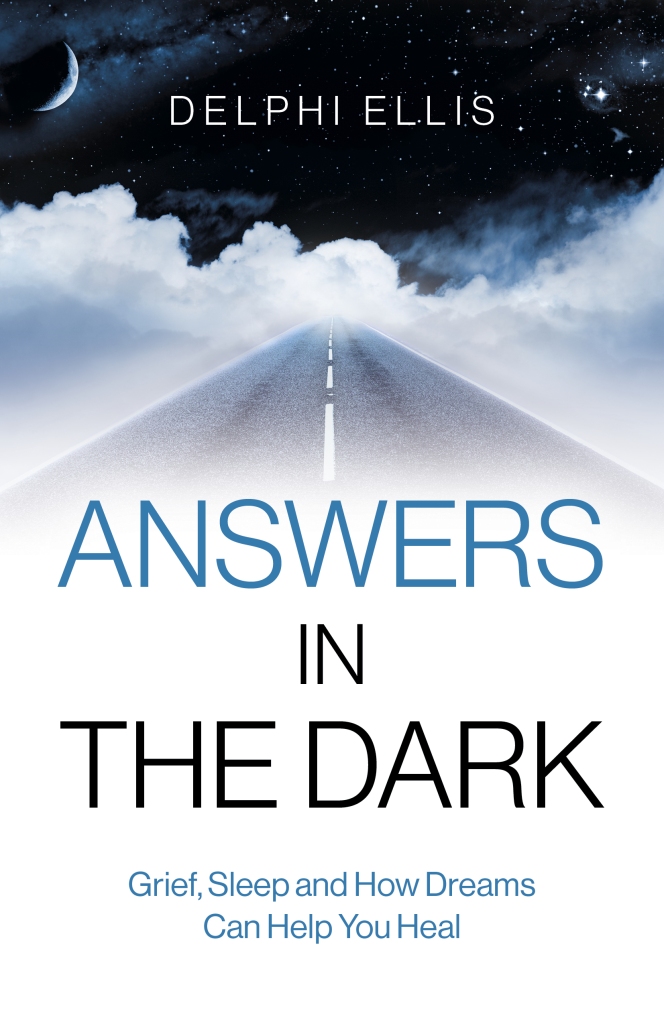
Out Now
The 4 am Mystery: That’s an actual thing by the way. Even before a global health crisis, people found themselves awake in the middle of the night. Answers In The Dark aims to join the dots between sleep, dreams and our mental health, specifically how grief shows up, even if no one has died.
It explores some of the Big Myths of sleep, offers a Sleep Cycle Repair Kit and tips on how to decode your own dreams. Out now on Amazon and Hive.
#1 Best Seller on Amazon for its category.
© Delphi Ellis All rights reserved.
 The Dreams Maven™
8 thoughts on “Why Do We Dream and What Do They Mean? A Look at Dream Theory”
Comments are closed.